Outsourcing Fulfilment: A Smarter Way to Manage Storage, Packing and Delivery
Running a business is really exciting at first. You feel happy. You think this is what you wanted. Then orders, for your business start coming in and things can get crazy. Your business orders start coming and it is hard to keep up with your business orders. You have to do a lot of work for your business when your business orders start coming in.When you are just starting out it seems simple to manage the products you have pack up the orders and arrange for them to be delivered.
As your online business grows, doing all of this work yourself can take up a lot of your time. You will probably spend time searching for products, packing boxes managing the products you have and setting up deliveries than you will actually working on making your online business bigger. This is where getting someone else to do the fulfilment, for you can make a difference. Of doing everything yourself like storing products packing orders, processing orders and shipping them out you can work with a fulfilment partner that does all of this for your online business.
What Is Outsourced Fulfilment?
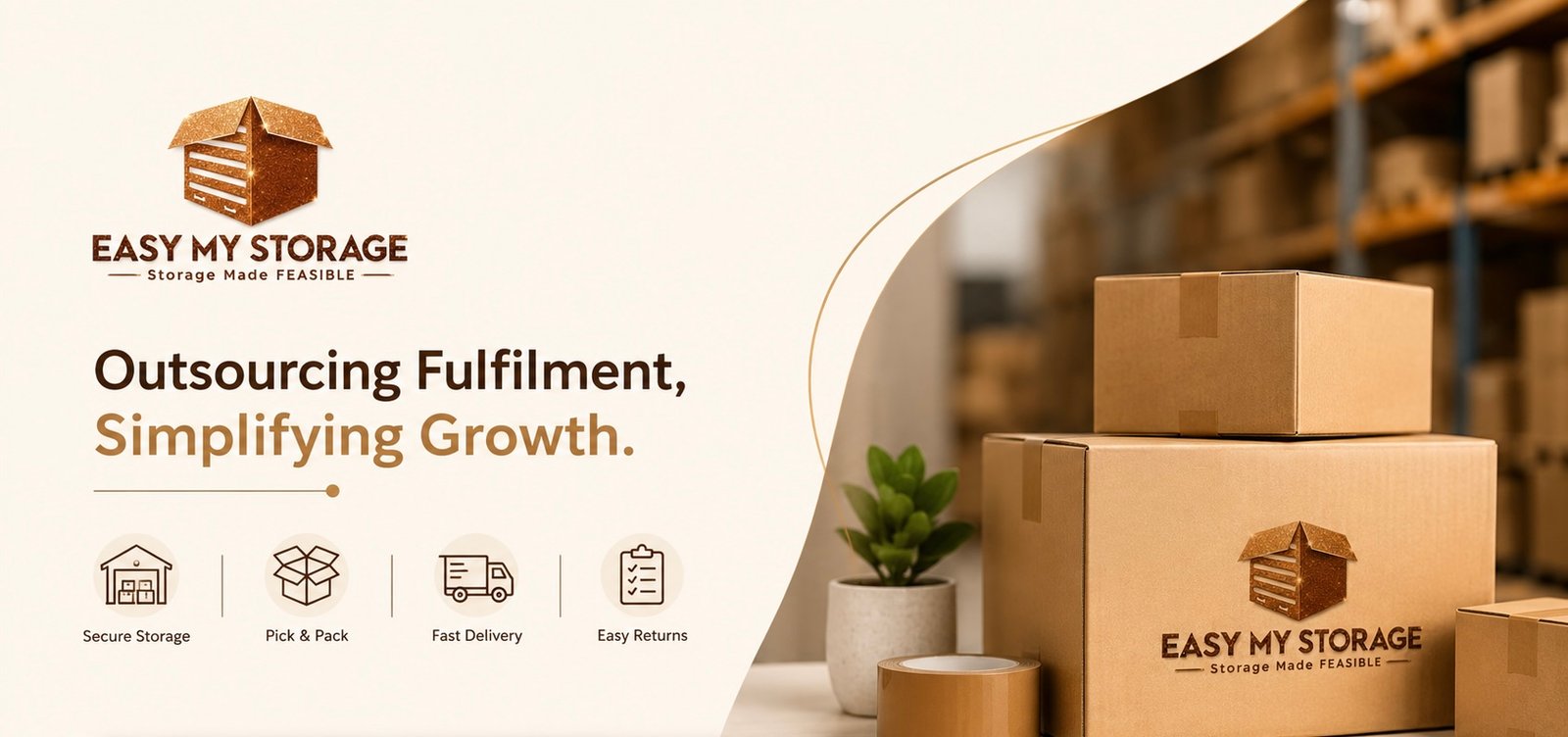
Outsourced fulfilment means handing over some or all of your order fulfilment operations to a third-party fulfilment provider.
Depending on your requirements, a fulfilment partner may handle:
- Inventory storage
- Order processing
- Picking and packing
- Labelling
- Dispatching orders
- Shipping coordination
- Returns management
- Inventory tracking
For e-commerce brands that are growing this can make a difference in their daily work. It can turn a complicated process into something that is much more organised and easy to manage. Of storing products in your house your office or a warehouse that costs a lot of money the products can be stored in a special place that is just, for sending out orders. Then when someone places an order the products can be sent out from this place.
Why Are Businesses Outsourcing Fulfilment?
The biggest reason is simple: growth creates complexity.
When you have only a few orders every day, fulfilment may not feel like a problem. But when orders increase, small tasks start taking up hours.
You may need:
- More storage space
- More packing materials
- Additional employees
- Better inventory systems
- More delivery coordination
- Space for returns
- A proper process for handling high order volumes
Managing all of this internally can become expensive and difficult.
Outsourcing fulfilment allows businesses to use professional infrastructure and expertise without having to build the entire operation themselves.
Benefits of Outsourcing Fulfilment
1. Save Time
Fulfillment involves a lot more, than putting a product in a box. A person needs to find the product look at the order take the item wrap it the right way put a label on it and get it ready to send out. When a fulfillment partner takes care of these jobs your team has time to work on marketing, sales, customer service making better products and growing the business.
2. Reduce Operational Costs
Setting up your own fulfilment operation can require significant investment.
You may need to spend money on:
- Warehouse rent
- Shelving and storage equipment
- Packaging supplies
- Inventory software
- Staff
- Utilities
- Security
- Maintenance
Outsourcing can reduce the need for these upfront investments and allow you to pay for the fulfilment services you actually need.
3. Get Flexible Storage
Inventory requirements can change throughout the year.
For example, an apparel brand may need significantly more storage before a festive season or during a major sale.
With outsourced fulfilment, businesses can often scale their storage requirements according to inventory levels instead of committing to a large warehouse space all year round.
4. Improve Inventory Management
Poor inventory management can cause products to be in the place create differences between what is recorded and what is actually there slow down order processing and make customers upset.
Professional fulfillment operations use storage systems and inventory tracking methods to make it easier to see what is, in stock and where it is kept.
Clear visibility of inventory can also help companies decide when to buy more and prevent having too much stock on hand.
5. Handle Growing Order Volumes
Think about getting 20 orders every day. Now think about getting 500 orders. The way you do things for 20 orders will not work for 500 orders.
A fulfilment partner can help you with the things you need to get all these orders ready. They can give you the space and the help you need to do all the work for a lot of orders. This means you can make your business bigger without having to make your own warehouse bigger away.
6. Faster Order Processing
Customers today want their orders to be handled fast. The time an order takes to get ready the longer the customer has to wait. A special fulfilment system can make the steps of picking items putting them in boxes and sending them out go smoothly. This helps cut down on delays, from when an order comes in to when it leaves the warehouse.
7. Easier Returns Management
Returns are an unavoidable part of e-commerce.
Managing returned products internally can create additional work for your team. A fulfilment partner can help organise the return process, receive returned products, check them, and update inventory according to the agreed process.
This creates a more structured approach to reverse logistics.
When Should You Outsource Fulfilment?
There isn't one specific order volume at which every business should outsource fulfilment.
However, outsourcing may make sense when:
- Your current storage space is becoming overcrowded.
- Your team spends too much time packing orders.
- Order volumes are increasing rapidly.
- Inventory is difficult to track.
- You are hiring employees mainly for fulfilment tasks.
- Orders are frequently delayed.
- You are expanding to new locations.
- You want to avoid investing in your own warehouse.
- Managing returns has become difficult.
The important thing is to look at the overall cost and time involved in managing fulfilment yourself.
In-House vs Outsourced Fulfilment
|
Factor |
In-House Fulfilment |
Outsourced Fulfilment |
|
Storage |
Managed by your business |
Managed by fulfilment partner |
|
Warehouse investment |
Usually required |
Lower upfront requirement |
|
Staff |
Your responsibility |
Partner handles operations |
|
Packing |
Internal team |
Fulfilment team |
|
Scalability |
Can require additional infrastructure |
Generally more flexible |
|
Inventory management |
Internal |
Managed through partner systems |
|
Returns |
Internal process |
Can be handled by partner |
|
Time required |
Higher |
Lower for your internal team |
The right choice depends on your order volume, budget, product type, and long-term business plans.
How Does Outsourced Fulfilment Work?
The process is really simple.
Step 1: Store Your Inventory
You send your products to the facility. They put them in special areas.
Step 2: Receive an Order
When someone buys something from your store the order details go to the people who handle the orders.
Step 3: Pick the Product
The team that handles the orders finds the product, in the storage area.
Step 4: Pack the Order
They check the product. Pack it up the way it is supposed to be packed.
Step 5: Label and Dispatch
They put a label on the package. Give it to the delivery people.
Step 6: Track and Manage
You can keep an eye on your products and the orders. Handle any problems that come up. This makes things easier for your products to get to the customer. The inventory and the customer are connected in a way.
What Businesses Can Benefit From Outsourced Fulfilment?
Outsourced fulfilment isn't limited to large e-commerce companies.
It can be useful for:
- D2C brands
- E-commerce businesses
- Fashion brands
- Beauty and skincare brands
- Electronics sellers
- Home and lifestyle businesses
- Subscription-box companies
- Small businesses
- Start-ups
- Seasonal businesses
Even small brands like the store can get something out of it if the process of getting products to customers is taking too much time or space away, from what the small brands do best. Small brands can really benefit from this if the process of getting products to customers is taking up a lot of time or space that the small brands need to focus on their work.
How to Choose the Right Fulfilment Partner
Choosing a fulfilment provider is an important decision because they will be responsible for handling your inventory and customer orders.
Before choosing a partner, consider:
Storage Capacity
Make sure the provider can accommodate your current inventory and future growth.
Location
A strategically located fulfilment centre can help improve delivery efficiency and shipping times.
Inventory Tracking
Ask how inventory is recorded, updated, and monitored.
Packaging Options
If your brand requires customised packaging, labels, inserts, or specific packing instructions, confirm that the provider can support them.
Scalability
Your fulfilment partner should be able to support you as your order volumes increase.
Returns Handling
Understand how returned products are received, inspected, stored, and added back into inventory.
Pricing
Don't focus on the storage fee. Take the time to understand the pricing structure, including receiving items picking them packing them coordinating shipping handling returns and any other extra charges.
Is Outsourcing Fulfilment Worth It?
When a business is getting bigger it can be really helpful to get someone to handle the work of sending out orders. This is called outsourcing fulfilment. It can take a lot of pressure off the people running the business so they have time to think about growing the business more. Outsourcing fulfilment is a way for businesses that are growing to make room, for new things.
The aim isn't just to hand over fulfilment to someone
The real aim is to create a system where your products are kept orders are handled quickly and customers get their items without your team having to deal with every single detail of the process.
For companies that're prepared to grow outsourced fulfilment can offer the flexibility needed to expand without always worrying about warehouse space packing areas, inventory stacks and delivery schedules.
Outsource Fulfilment with Easy My Storage
At Easy My Storage companies can make their storage and fulfillment tasks easier by using storage options that are built to fit their daily work needs.
No matter if you are handling products not having enough room, for your business or getting more orders every day the correct storage and fulfillment system can help you spend less time dealing with logistics and more time making your business bigger.
Because your business should be focused on selling more not trying to figure out where to put things.
Frequently Asked Questions
1. What is outsourcing fulfilment?
So, when we talk about outsourcing fulfilment we are basically talking about outsourcing fulfilment. This means we hire someone a third-party provider to take care of things like storing our stuff picking the things we need packing them up processing orders and then sending them out. Outsourcing fulfilment is when we let this third-party provider manage all these activities, for us like inventory storage, picking, packing order processing and dispatch which's a big part of outsourcing fulfilment.
2. Is outsourced fulfilment for large businesses?
No. Small businesses, start-ups, D2C brands and growing e-commerce businesses can also use fulfilment when managing orders and inventory internally becomes difficult.
3. Does outsourced fulfilment include storage?
In cases yes. Fulfilment providers can store your inventory in their facilities and process orders as they are received.
4. Can fulfilment providers handle returns?
Many fulfilment providers offer returns management as part of their services. However the exact process depends on the provider and your agreement.
5. Is outsourcing fulfilment cheaper than having a warehouse?
This is an option for businesses that do not want to spend a lot of money on warehouse rent, equipment, staff and fulfilment infrastructure. The costs of this option are different, for each business. It depends on the inventory order volume, the location of the business and the services that the business needs. Businesses that use this option have to pay for the services they need. The cost is based on the inventory order volume, location and services required by the businesses.
6. Can a small e-commerce business outsource fulfilment?
Yes. Outsourcing can help small e-commerce businesses avoid spending time and space on packing and inventory management.
7. Does outsourced fulfilment help businesses scale?
Yes. A fulfilment partner can offer storage and the ability to handle operations as the number of orders goes up. This makes it simpler for companies to grow. A fulfilment partner can offer storage and the ability to handle operations as the number of orders goes up. This makes it simpler for companies to grow.
8. What should I consider before outsourcing fulfilment?
When you are looking for storage you need to think about the storage capacity the location, the pricing, the inventory tracking, the order processing, the packaging the returns management, the scalability and the providers ability to meet your requirements. You have to consider the storage capacity and the location of the storage. The pricing is also very important. Then there is the inventory tracking and the order processing. The provider has to be good, at packaging and returns management. The storage has to be scalable. The provider has to be able to meet your requirements. The providers ability to meet your storage requirements is very important.
9. What is the difference between warehousing and fulfilment?
Warehousing is mainly, about keeping track of the things we have in stock. On the hand fulfilment is the whole process of getting the orders storing them finding what people want packing it up processing the orders and then sending them out to the customers. Warehousing and fulfilment are two things that help us get the products to the people who bought them.
10. When is the right time to outsource fulfilment?
The right time is usually when fulfilment starts taking up a lot of time, space, money or manpower from your core business. This is also the case when your current setup cannot handle your growth easily.